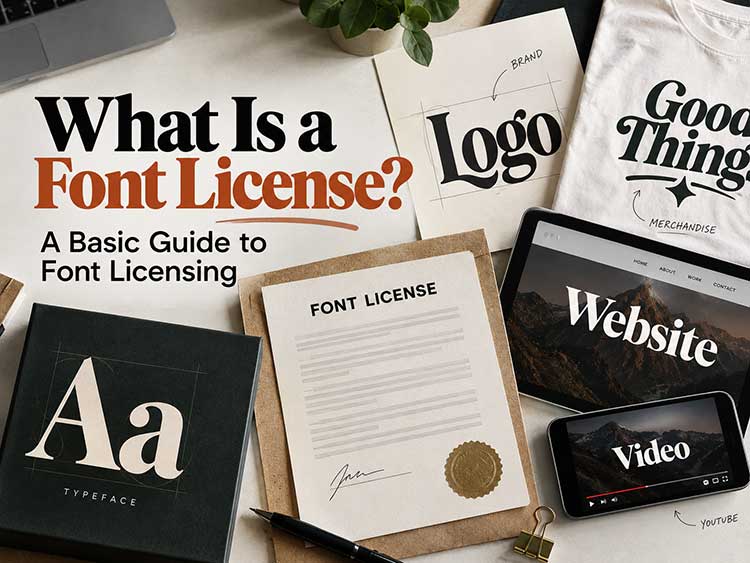
If you have ever downloaded or purchased a font, you have probably seen the term font license. But what does it actually mean?
Can you use a font for a logo? What about a T-shirt, website, YouTube video, or client project? And if you purchase a font, do you actually own it?
These are common questions, especially for designers, small businesses, and anyone using fonts for commercial projects.
The basic idea is simple:
A font license is permission to use a font under specific conditions.
When you purchase a font, you generally purchase the right to use the font—not ownership of the font itself. The exact permissions depend on the license provided by the font designer or foundry.
Let’s look at the basics.
What Is a Font License?
A font license is an agreement between the font creator or foundry and the person or company using the font.
It explains how the font software can be used and what uses are restricted.
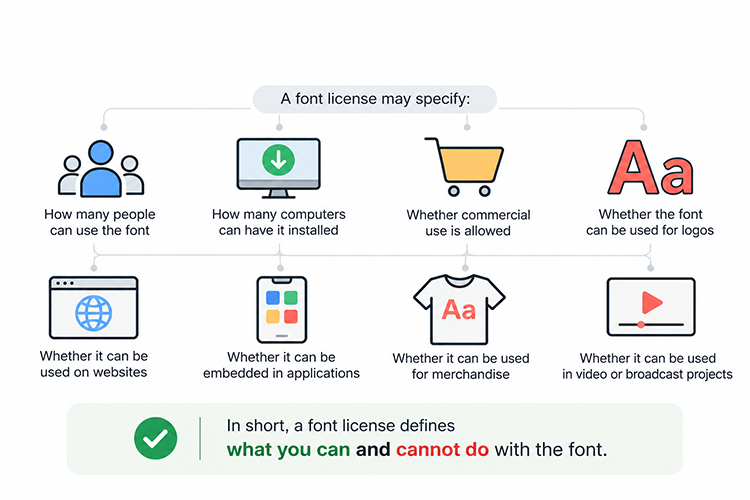
Depending on the license, it may specify:
- How many people can use the font
- How many computers can have it installed
- Whether commercial use is allowed
- Whether the font can be used for logos
- Whether it can be used on websites
- Whether it can be embedded in applications
- Whether it can be used for merchandise
- Whether it can be used in video or broadcast projects
In short, a font license defines what you can and cannot do with the font.
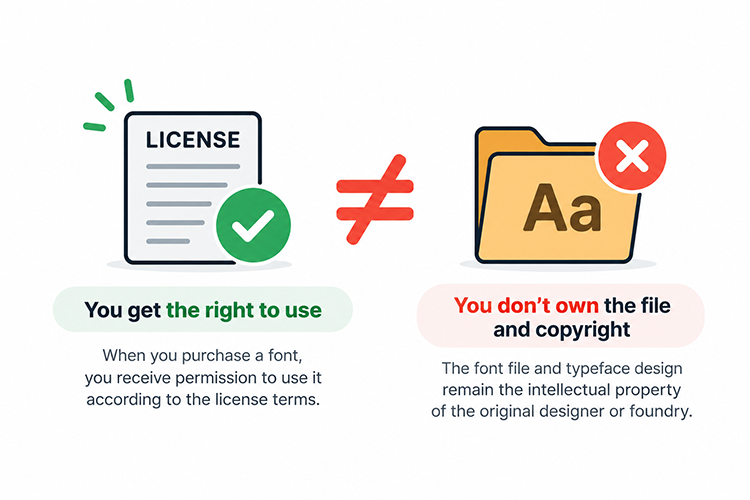
Does Buying a Font Mean You Own It?
No.
This is one of the most important things to understand about font licensing.
When you purchase a font, you normally aren’t purchasing the copyright or ownership of the typeface. Instead, you are obtaining permission to use the font according to the terms of its license.
Think of it like buying a ticket. The ticket gives you permission to enter a venue, but it doesn’t make you the owner of the venue.
Fonts work in a similar way.
The font software and typeface design generally remain the intellectual property of the original designer or foundry, while the customer receives specific rights to use the font.
Why Do Fonts Need Licenses?
Creating a font involves much more than drawing letters.
Font designers work on letterforms, spacing, kerning, glyphs, language support, OpenType features, testing, and font engineering. The resulting font software is intellectual property.
A license allows the designer to define how that work can be used.
For example, using a font to create a personal poster is very different from embedding the same font into a commercial application or distributing it to thousands of users.
The license establishes those boundaries.
Personal Use vs. Commercial Use
One of the first things you may encounter when looking at a font license is the difference between personal use and commercial use.
Personal Use
Personal use generally refers to projects that are not created for commercial purposes.
Examples might include:
- Personal artwork
- Private invitations
- Hobby projects
- Personal posters
- Non-commercial experiments
However, the exact definition can vary between font creators, so always check the specific license.
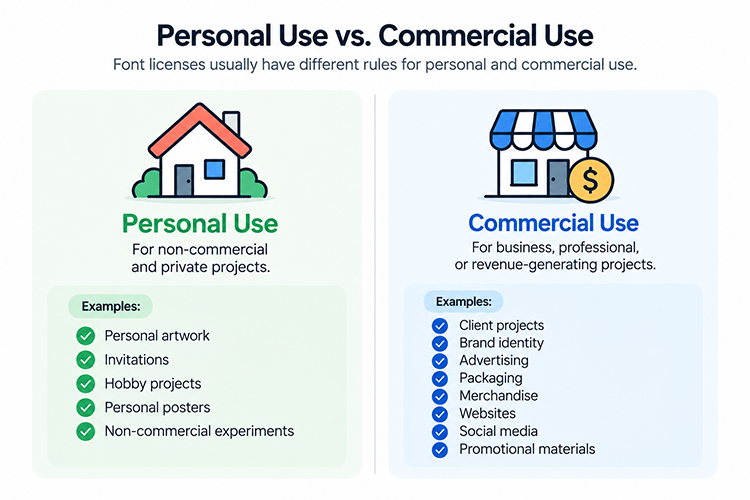
Commercial Use
Commercial use generally involves business, professional, promotional, or revenue-generating activities.
Examples include:
- Client projects
- Brand identity
- Advertising
- Packaging
- Merchandise
- Commercial websites
- Social media campaigns
- Promotional materials
If you’re creating something for a client or business, make sure your font license covers that type of use.
What Is a Commercial Font License?
A commercial font license gives you permission to use a font for commercial purposes according to the terms of that license.
However, commercial does not automatically mean unlimited.
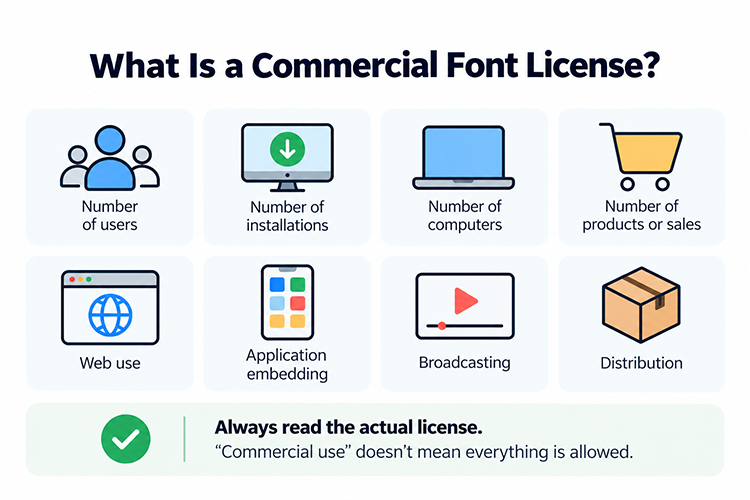
A license may still have restrictions involving:
- Number of users
- Number of installations
- Number of computers
- Number of products or sales
- Web use
- Application embedding
- Broadcasting
- Distribution
For example, a license might allow you to use a font for commercial graphic design but require a different license to embed the font inside an application.
This is why you should always read the actual license rather than assuming that “commercial use” means everything is allowed.
Can I Use a Font for a Logo?
This is one of the most common questions about font licensing.
In many cases, a licensed font can be used to create a logo or other branding artwork. However, the exact permission depends on the font license.
There is also an important distinction between using a font to create a logo and using that logo as a trademark.
For example, some licenses may allow you to create and use an untrademarked logo with the font, while a trademarked logo may require additional permission or a specific logo/trademark license.
There is also a difference between delivering the finished logo artwork and distributing the font software itself. You can generally deliver the finished logo to your client if the license allows it, but this does not automatically give the client the right to receive or use the font file.
If you’re designing a logo for a client, always check whether the license covers logo use, trademark registration, and font distribution.
Can I Use a Font on T-Shirts and Merchandise?
Again, it depends on the license.
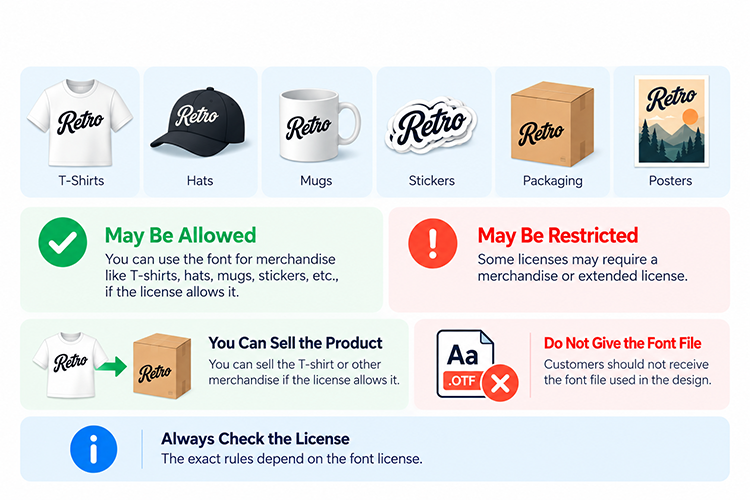
Using a font to create artwork for T-shirts, hats, mugs, stickers, packaging, posters, or other products may be permitted under some licenses but restricted under others.
Some licenses specifically cover physical products or merchandise, while others may require an extended or additional license.
The important distinction is:
Using a font to create artwork is not the same as distributing the font software.
For example, a customer purchasing a T-shirt should not automatically receive the font file used to create its design.
What About Websites and YouTube Videos?
Digital use can have its own licensing requirements.
For websites, fonts may be embedded using technologies such as CSS @font-face. Some licenses allow webfont use, while others require a separate web license.
Video can also require additional permission. Fonts may be used in YouTube videos, advertisements, films, motion graphics, television, and other video content, but the required license can vary.
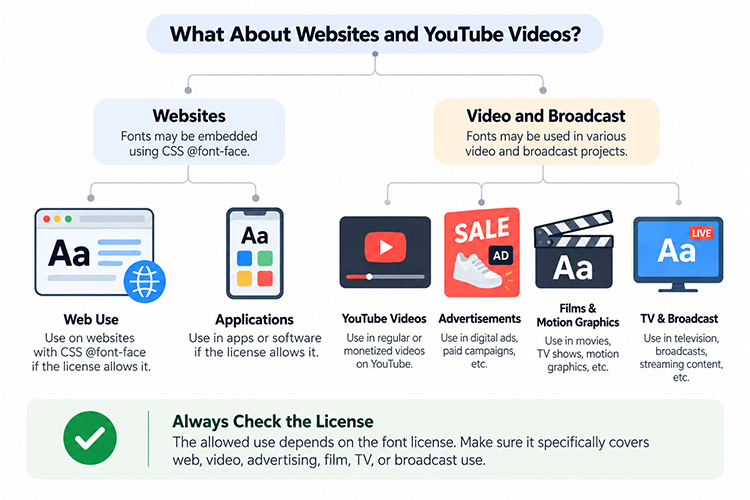
If you’re using a font in a commercial website, video, or broadcast project, check whether your license specifically covers that type of use.
What Is a Font EULA?
Another term you’ll often see is EULA.
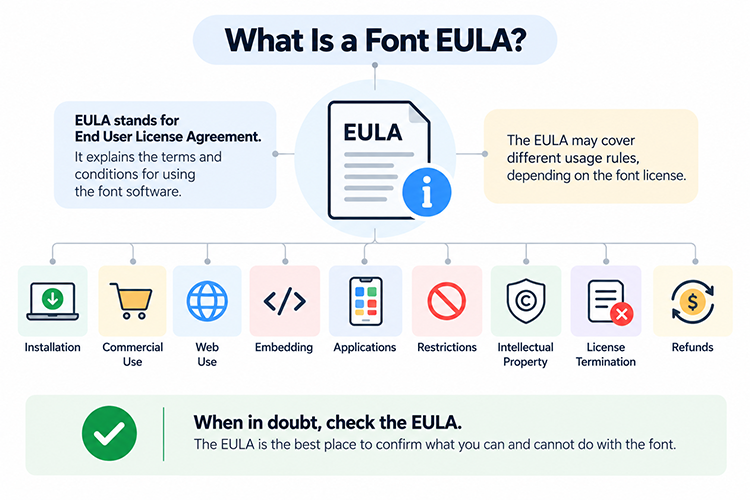
EULA stands for End User License Agreement.
The EULA is the document that explains the terms and conditions for using the font software.
It may cover:
- Installation
- Commercial use
- Web use
- Embedding
- Applications
- Restrictions
- Intellectual property
- License termination
- Refunds
When you’re unsure whether a particular use is allowed, the EULA is one of the first places you should check.
Why Should You Read the Font License?
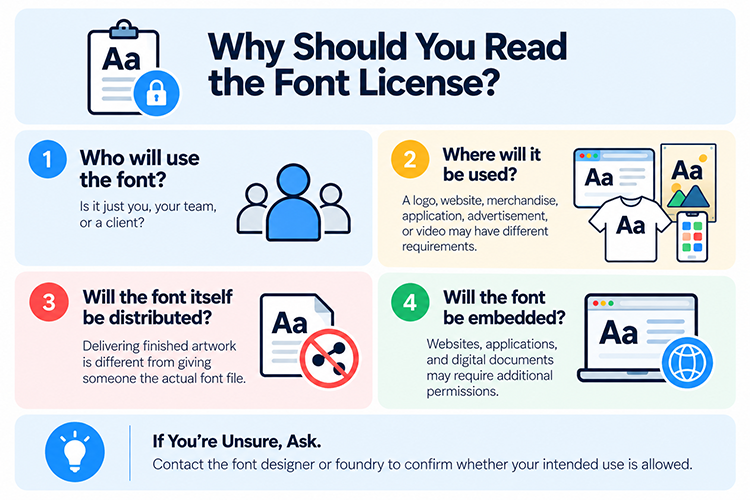
It can be tempting to download a font and immediately start designing. But before using it commercially, take a moment to check the license.
Ask yourself:
Who will use the font?
Is it just you, your team, or a client?
Where will it be used?
A logo, website, merchandise, application, advertisement, or video may have different requirements.
Will the font itself be distributed?
Delivering finished artwork is different from giving someone the actual font file.
Will the font be embedded?
Websites, applications, and digital documents may require additional permissions.
If you’re unsure, contacting the font designer or foundry is always a good idea.
Final Thoughts
Font licensing may seem complicated at first, but the basic concept is straightforward:
A font license tells you how you are allowed to use a font.
Buying a font generally gives you permission to use the font under specific conditions—it does not automatically transfer ownership of the font or its intellectual property.
Whether you’re creating a logo, designing merchandise, building a website, producing social media content, or working on a commercial video, make sure your intended use matches the license you have.
Understanding font licensing protects both font creators and font users, and it helps prevent problems before they happen.
If you want to learn more about the specific licensing terms for Arterfak Project fonts, you can review the Arterfak Project End User License Agreement (EULA) before using a font for your project.